


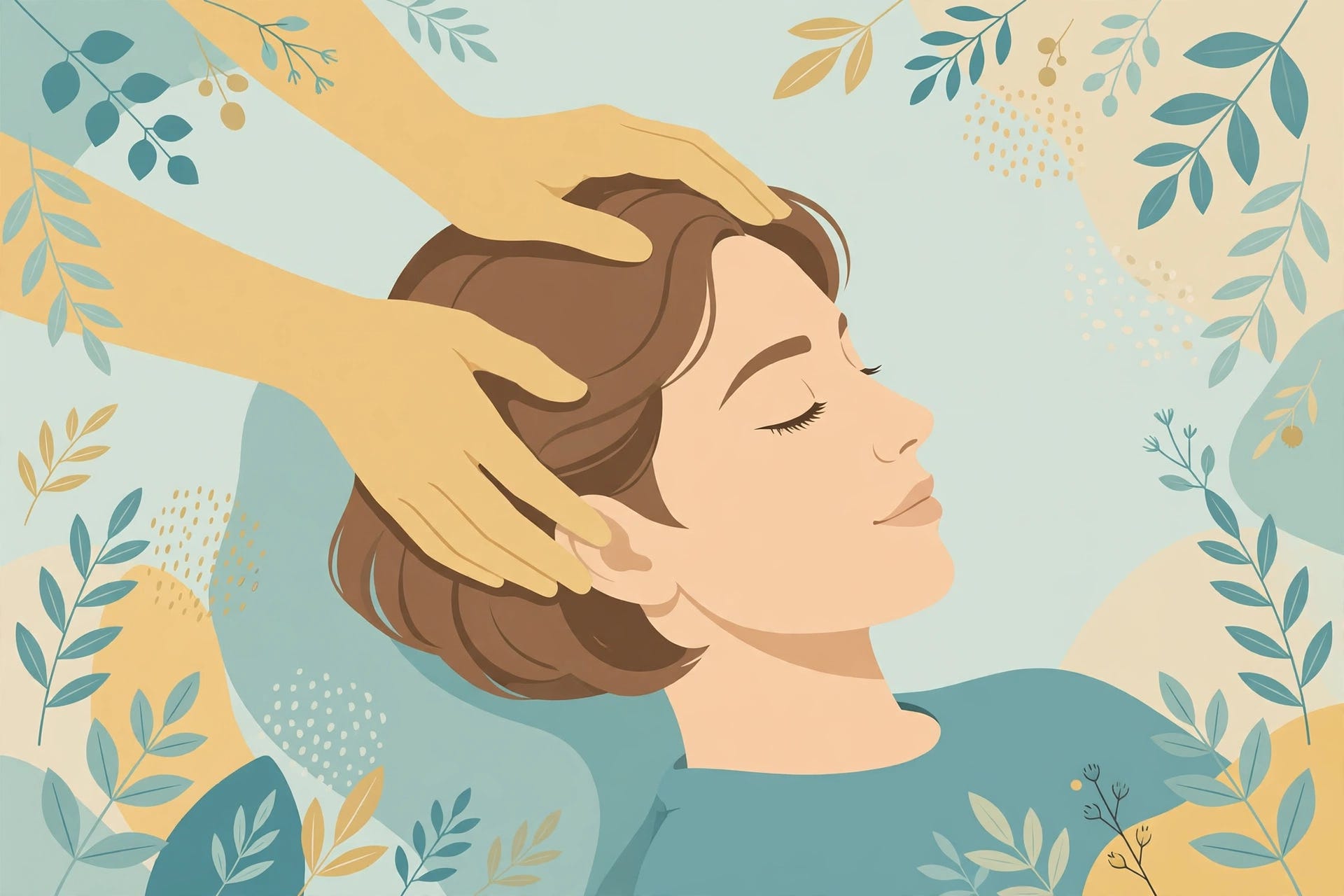
When we think about bodywork, we often imagine someone working on tight muscles, stretching stiff joints, or applying pressure to areas that hurt. But not every hands-on approach involves deep pressure or forceful movement.
Craniosacral therapy takes a different approach. It’s a gentle form of bodywork that focuses on helping the body relax, settle, and release tension.
What Is Craniosacral Therapy?
Craniosacral therapy, often called CST, is a hands-on technique that uses very light touch, primarily around the head, neck, spine, and sacrum (the triangular bone at the base of the spine).
The craniosacral system includes the membranes and fluid surrounding the brain and spinal cord. Practitioners believe that subtle restrictions or patterns of tension in this system may influence how the body feels and functions.
Rather than using strong pressure to make something move, the practitioner uses gentle contact and pays attention to subtle changes in the tissues.
The idea is to work with the body rather than force it to respond.
Where Did It Come From?
The roots of craniosacral therapy go back to osteopathic physician William Sutherland, who began developing cranial osteopathy in the early 1900s.
In the 1970s, another osteopathic physician, Dr. John Upledger, expanded on these ideas and developed what became known as craniosacral therapy.
Today, CST is practiced by a variety of hands-on professionals, including massage therapists, chiropractors, osteopaths, and other bodywork practitioners.
What Does a Session Feel Like?
If you’ve never experienced craniosacral therapy, you might be surprised by how little movement is involved.
Most sessions take place while you’re lying comfortably on a treatment table, fully clothed. The practitioner gently places their hands at different locations, often beginning around the head, shoulders, or lower back.
There may be long periods when it seems like very little is happening.
Some people describe feeling warmth, subtle movement, deep relaxation, or a sense of tension letting go. Others simply feel calm or even fall asleep.
There’s no particular sensation you’re supposed to experience. Everyone responds differently.
Why Do People Try It?
People often seek craniosacral therapy for headaches, neck tension, jaw discomfort, stress, or simply because they want a gentle approach to bodywork.
Some find the experience deeply relaxing, particularly when they’re feeling overwhelmed or physically tense.
It’s important, however, to distinguish personal experiences from proven medical benefits. Research on craniosacral therapy remains limited, and studies have not consistently demonstrated that it effectively treats specific health conditions. The subtle craniosacral rhythm described by practitioners has also not been reliably established through scientific measurement.
That doesn’t mean someone can’t have a positive experience. It simply means we should be careful about promising results that science hasn’t confirmed.
The Value of Slowing Down
One of the interesting things about craniosacral therapy is how different it feels from our usual approach to discomfort.
We’re accustomed to doing something about pain. Stretch it. Massage it. Push on it. Make it go away.
Craniosacral therapy invites a quieter experience.
For some people, simply lying still, feeling supported, and allowing their nervous system an opportunity to settle can be valuable.
And sometimes, that’s exactly what a person is looking for.
Is Craniosacral Therapy Right for You?
If you enjoy gentle bodywork or find deeper techniques uncomfortable, craniosacral therapy may be worth exploring as a relaxation-focused complementary approach.
It should not replace appropriate medical evaluation or treatment, especially for persistent headaches, neurological symptoms, or unexplained pain.
The goal isn’t to promise a cure or claim that every problem can be resolved with a light touch.
It’s to recognize that there are different ways to approach comfort, relaxation, and caring for the body.
Sometimes, less really can feel like more.
Here’s to your health,