

What if moving better wasn’t always about trying harder?
We often approach our bodies with the idea that improvement requires more effort: stretch farther, strengthen more, hold better posture, push through resistance. There is a place for developing strength and endurance. But there is also value in stepping back and noticing how we move in the first place.
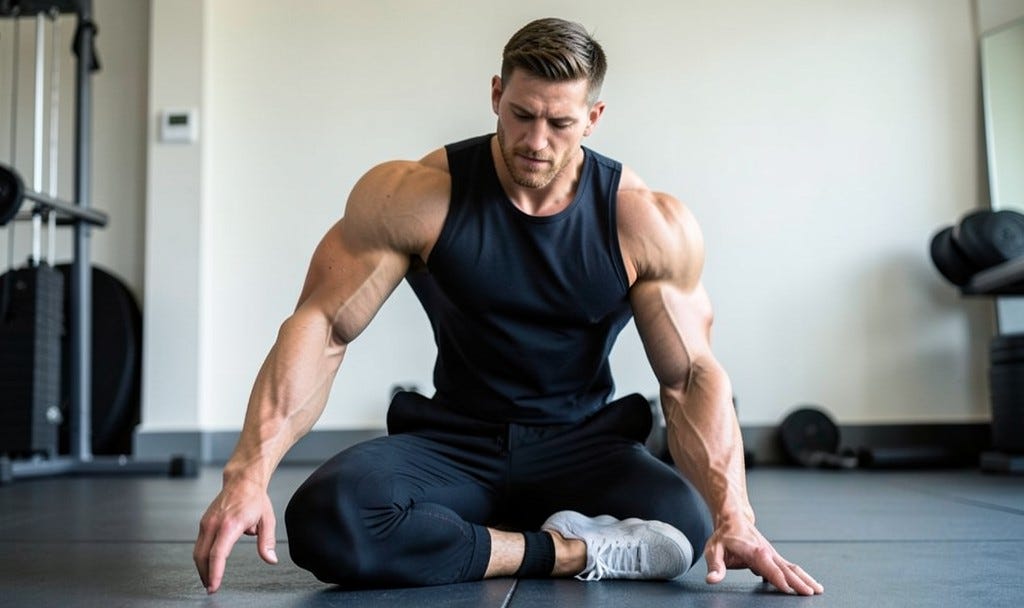
Do you hold your breath when you reach overhead? Tighten your shoulders when you concentrate? Use more effort than a simple task seems to require?
The Feldenkrais Method invites us to explore these questions—not by forcing the body into an ideal position, but by using gentle movement to discover different ways of doing familiar things.
At its heart, the method is about learning.
What Is the Feldenkrais Method?
The Feldenkrais Method is an educational approach that uses movement and attention to help people develop greater awareness of themselves.
Rather than treating movement as a series of exercises to perform correctly, it treats movement as an opportunity to explore. Participants notice how different parts of the body work together, where they use unnecessary effort, and what happens when they try another approach.
The goal is not to achieve a perfect pose or imitate someone else’s movement. It is to expand the choices available to you.
That distinction matters. A person may be able to complete a movement while still experiencing it as awkward or effortful. Feldenkrais lessons encourage curiosity about the process: How are you doing it? What else participates? Could it feel easier?
The Man Behind the Method
Moshe Feldenkrais (1904–1984) was a physicist and judo practitioner who developed the method that bears his name.
His work brought together an interest in human movement, awareness, and learning. Instead of viewing the body simply as something to stretch, strengthen, or manipulate, he explored how people could change their functioning by becoming more aware of their actions.
His book, Awareness Through Movement, introduced many readers to this perspective.
The emphasis was broader than physical performance alone. Feldenkrais was interested in how people functioned as whole individuals—and how exploring movement might support that process.
Two Ways to Experience the Method
Feldenkrais practitioners work primarily through two complementary approaches.
Awareness Through Movement
Awareness Through Movement lessons use verbal guidance to lead participants through sequences of movements. They are often offered in groups, although they can also be taught individually.
The movements provide something to investigate rather than something to conquer.
You might explore turning, reaching, or coordinating different parts of your body. Along the way, your attention shifts from simply completing the action to noticing its details.
Where does the movement begin? What feels comfortable? Where does effort increase? Does a small change make a difference?
The lesson becomes an exploration of your own experience rather than a test of flexibility or strength.
Functional Integration
Functional Integration is the individual, hands-on form of the method.
A practitioner uses touch and guided movement to help a student explore how they organize their actions. The interaction is intended as a form of communication and learning, rather than an attempt to force the body into a prescribed shape.
A session may focus on a particular difficulty or explore movement more broadly.
Both approaches share the same underlying interest: helping the person discover options they may not have noticed before.
Why People Explore Feldenkrais
People come to the method for different reasons.
Some are dancers, musicians, or other performers interested in refining their movement. Others want to explore everyday actions that feel restricted or uncomfortable. Still others are drawn to its emphasis on awareness and personal development.
These interests do not mean the method should be presented as a cure.
Feldenkrais is generally framed as movement education rather than a system for diagnosing or treating disease. Its advocates have described a wide range of benefits, but those claims should not be confused with guaranteed outcomes.
For someone dealing with persistent pain, injury, or a neurological condition, exploring movement does not replace appropriate medical evaluation or care.
Moving Beyond “Doing It Right”
One of the most appealing aspects of Feldenkrais is its invitation to replace judgment with curiosity.
Instead of asking, “Am I doing this correctly?” you might ask:
What am I noticing?
Where am I working harder than necessary?
What changes when I try a different approach?
Which option feels more comfortable?
This shifts the experience from correcting a supposedly flawed body to understanding how you use the body you have.
It also leaves room for individuality. The point is not to make everyone move identically. It is to help each person explore a wider range of possibilities.
A Different Relationship With Your Body
The Feldenkrais Method offers a different starting point for movement: pay attention before adding effort.
That does not make strength, conditioning, or other forms of care unimportant. It simply makes room for another question—whether the way you perform an action deserves as much attention as your ability to perform it.
For anyone accustomed to pushing, correcting, or judging their body, that can be a refreshing change.
Movement becomes more than a task to complete. It becomes a way to listen, experiment, and learn.
And sometimes, the most interesting discovery is not how much more you can do, but how differently you can do what you already do.