


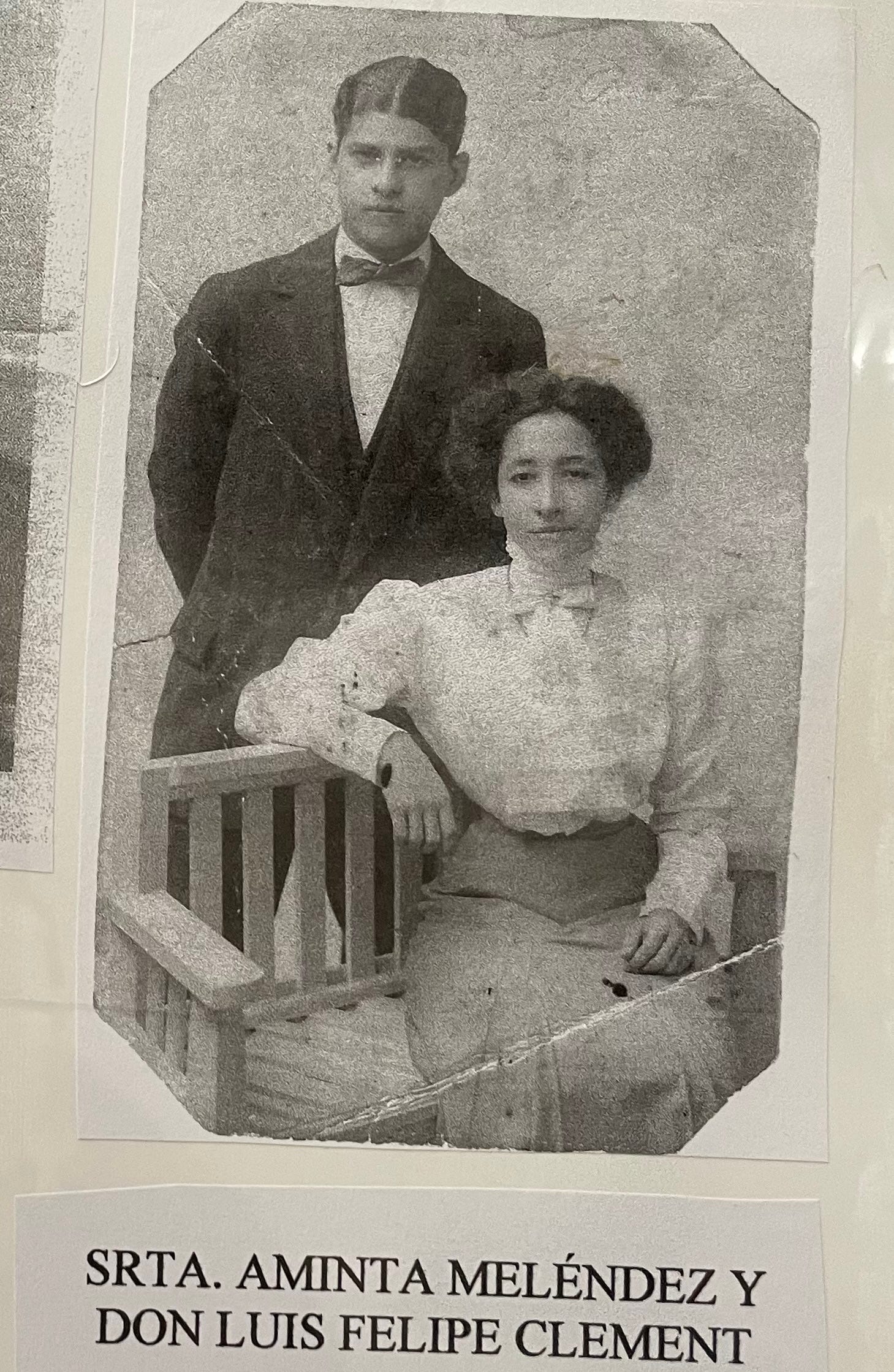
My great-aunt once carried a revolution in her hands. At seventeen, she boarded a train in Colón with a secret letter hidden in her umbrella and rode across the isthmus to Panama City while a country hung in the balance. By the time I knew her, she was an old woman yelling at us from a window because we were playing too loud.
Her name was Aminta Meléndez. She was born in Colón in 1886 and, as a teenager, she carried a secret letter by train from Colón to Panama City during the 1903 separation from Colombia, the paper rolled and tucked away inside her umbrella. Her father, my grandfather, Porfirio Meléndez, was a revolutionary leader in Colón and later the first governor of the province, and he sent her because a teenage girl attracted less suspicion than a man in that tense moment.
The letter told the separatist leaders that Colón was ready, that Colombian troops were no longer in full control, and asked them to send General Herbert Jeffries to secure the port with the USS Nashville and deal with the Colombian ship Cartagena, which had some 500 troops that were sent to quash a rebellion.
That decision—handing his daughter a letter and putting her on a train—folded my family straight into the middle of national history. In Panama, Aminta’s story became part of the country’s founding memory, the story of a brave young woman helping midwife a republic. I have no interest in tearing that down. She is taught as a hero and one of the founding mothers, and she was one.i
By the time I arrived in the story, all of that was already legend.
Bohío under water
Before Colón and the canal became the backdrop to my childhood, there was Bohío.
My family owned most of the land in that town, along the Chagres River. When the United States built the dam across the Chagres and created Gatun Lake for the canal, entire communities were displaced as the valley flooded beneath the rising water. Family legend says my grandfather refused to leave his land. As the water kept rising, the Americans had to rescue him from the roof of his house as Gatun Lake rose around him.
I can’t document every detail of that story, and I don’t need to. In my family, it has always been told as truth: Porfirio Meléndez stayed put until the lake took the town from under him. Part of the compensation for the loss of that land—the majority of Bohío—was a large wooden house in Colón.
That house would become the stage for almost everything I remember.
Two houses and three avocado trees
My father later built our house behind that one, out of cinder blocks. It was not a tiny little shack. It was a good-sized house, but it only had 2 bedrooms. The house in front felt like another world entirely—something like ten rooms, with formal downstairs areas like a proper well-to-do house where people could receive guests.
Between the large wooden house in front and our house in the back, there was a wide lot that was basically our kingdom. We had three giant avocado trees. The trees were incredibly tall, so the avocados from way up high would fall and split open on the ground. The dogs would eat them, and they had these ridiculously shiny coats and looked super healthy, like they were in on some secret diet.
There was also a guanábana tree that only produced one fruit per season. That single guanábana carried way more emotional weight than you’d think a piece of fruit could. There was always some conflict and quiet bitterness between my mom and the aunts who lived in the big house over who got the guanábana that year, who got the naranja china, who got the bananas from the trees.
So the backyard wasn’t just a place to play. It was where invisible lines were drawn: kids running under avocado trees, dogs eating the split fruit, adults negotiating and resenting who got which sweetness from which branch, season after season.
My great-aunt Aminta lived in the front house. By then she was old, almost in her nineties, and she would yell at us from the window because we were playing too loud.
That is how I first knew her—not as a heroine from a history lesson, but as the old woman in the front house who could not stand the sound of children laughing.
She had never married. In fact, if anyone called her “Señora,” she would bristle and immediately correct them: “Señorita.” She was very particular about that. She had no children of her own, and maybe that meant nothing. Or maybe it meant something. I’ve sometimes wondered whether the sound of children playing scraped against a life she never had.
I can’t know that for sure. It is only one possibility. But I remember the correction very clearly: not Señora, Señorita.
My father and Aminta
My father wanted nothing to do with her.
When she yelled at us from the window, he would tell me not to pay attention to her. There was a firmness in the way he said it that I understood long before I understood why. Later I learned that she had physically abused him when he was a child. In those days, some of what she did might have been written off as “discipline,” but by any honest standard today it would be seen as straight-up abuse.
That does not erase her place in Panama’s history. It does not cancel the train ride or the letter or the courage it took to do what she did. It just means that public honor and private memory are not always the same thing.
So even though we lived on the same property, in houses only yards apart, there was a distance between them that could not be measured in feet.
The day the president came
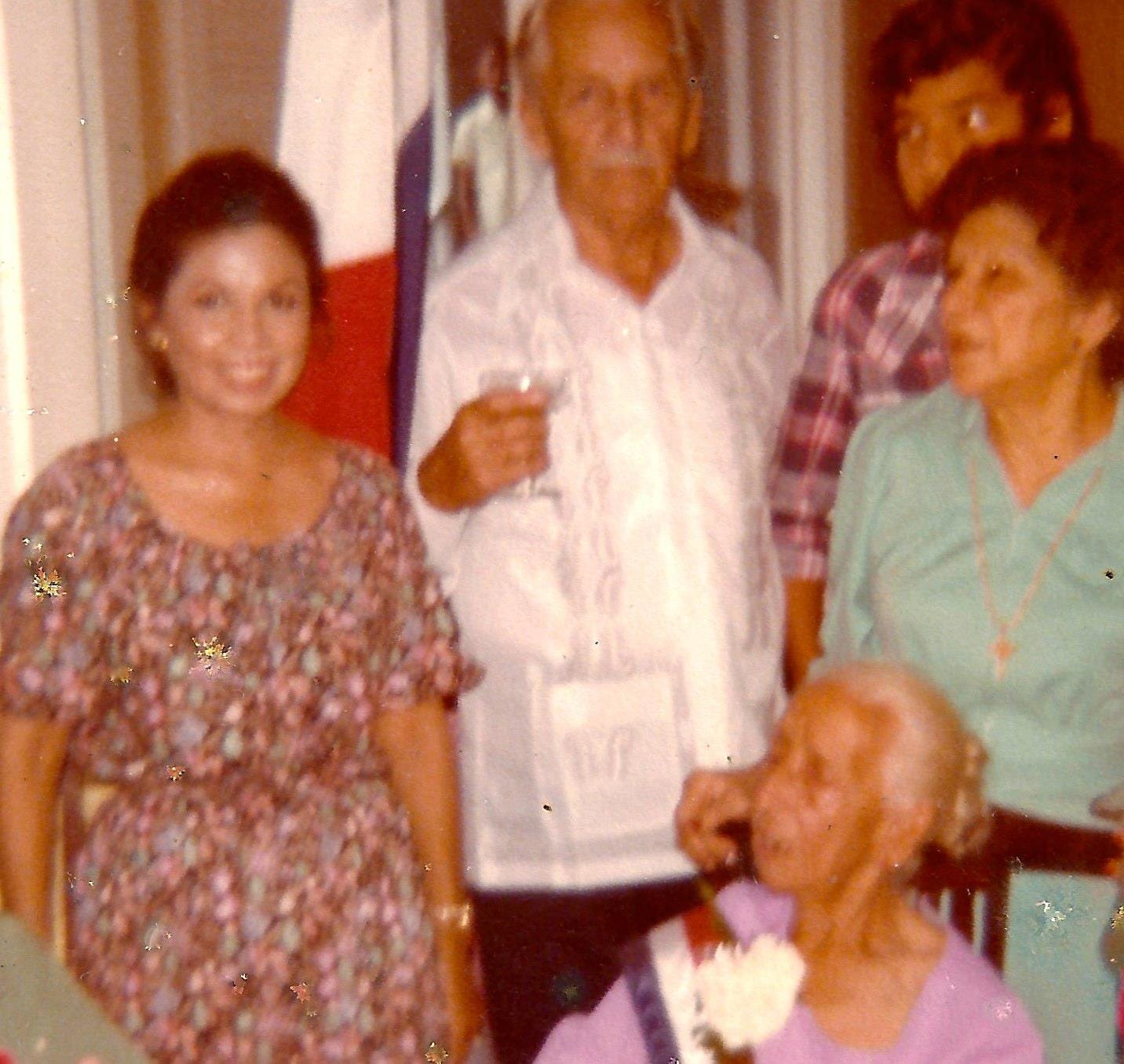
In 1979, there was a big to-do because President Arístides Royo came to visit her. Royo was president of Panama from October 1978 until July 1982, and I remember the visit as an official ceremony, with dignitaries, formalities, and some kind of declaration presented to her in recognition of her role in the nation’s history.
I remember that I had to dress up in my fancy clothes because the president was coming.
What I remember most, though, is not the language of the ceremony. It’s the food.
They had good catering. There were little sandwiches with the crusts cut off, arranged neatly like something from another class of life. There were sweets everywhere. To a kid, it felt elegant and important and slightly unreal. The same house where she yelled at us from the window had suddenly become a place of state recognition, polished and ceremonial.
People came to honor the patriot. I was there in dress clothes, eyeing the sandwiches and sweets.
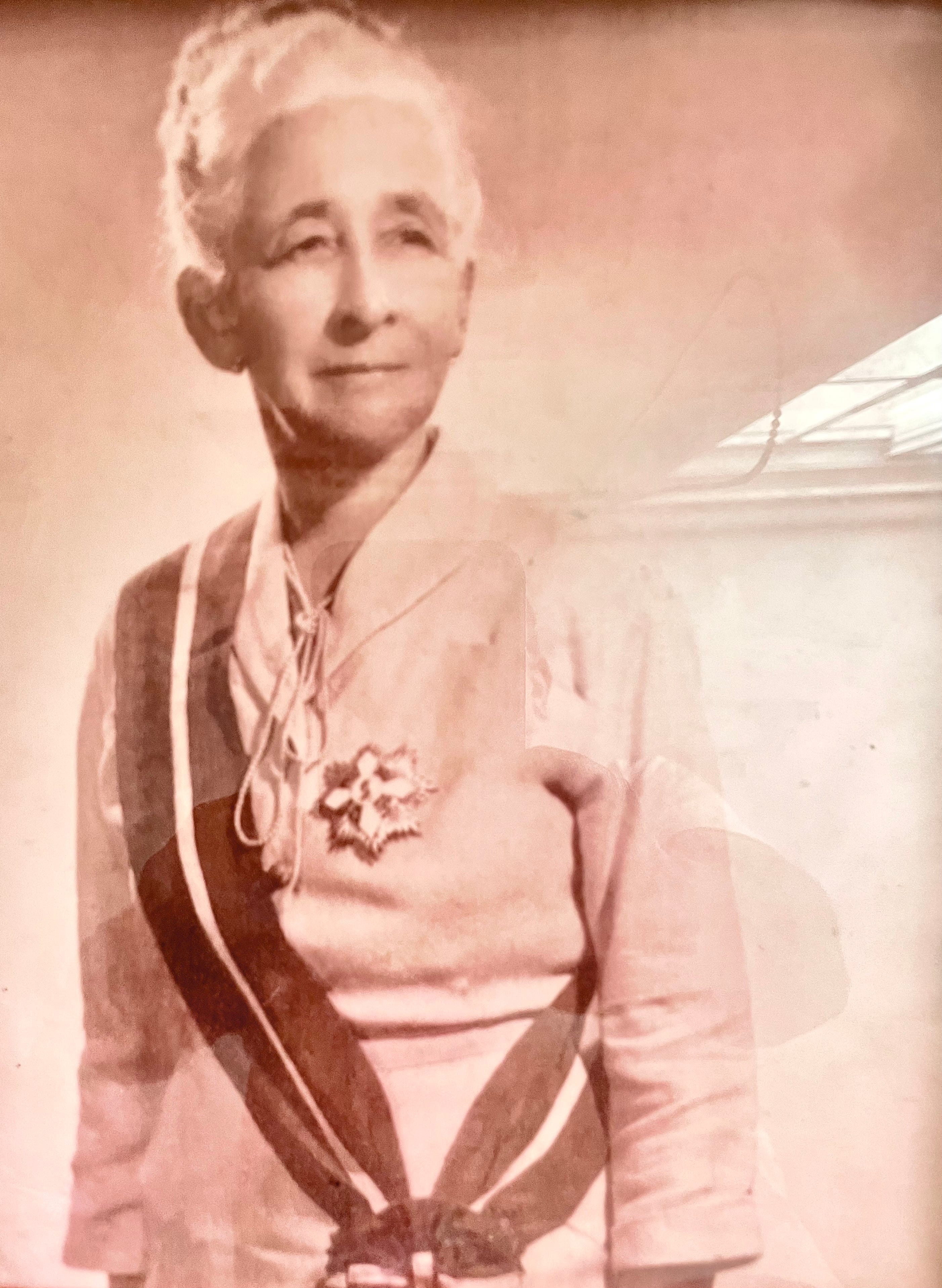
A few months later, she died in Colón on April 29, 1979.
Her last days
Toward the end, she had dementia. My dad referred to her as “goofy” — his word for older people who were starting to show Alzheimer’s symptoms.
In those last months, she would call out to my father constantly.
Not to yell at us kids this time. Just calling for him. Calling his name again and again from somewhere inside the fog of her mind.
My father ignored her completely. He would not answer. He would not go to her. He wanted nothing from her, and he was not going to offer anything back.
I have often thought she may have been trying, in her own way, to ask for forgiveness for whatever had happened between them. But my father would have none of it. Whatever words she may have wanted to say came too late.
There was no dramatic reconciliation. No scene of healing. Just her calling, “goofy” in his private vocabulary, and him staying silent.
Leaving Panama
Soon after that, my mother took us to the United States so we could continue high school there. It was not a leap into a new language for me, because I had already attended Canal Zone schools. What changed was not the language so much as the country, the household, and the life around it.
At the time, I thought the move was mainly about school and opportunity.
About a year later, I found out the real reason was that my mother was leaving my father.
Two truths
There are two truths about Aminta Meléndez, and I have lived with both.
One is the truth Panama tells: the brave young woman on the train, hiding a letter in her umbrella from Colombian authorities, helping change the course of a country. That truth deserves to stand.
The other is the truth of family: the unmarried aunt who insisted on “Señorita,” who never had children, who yelled at us from the window, who hurt my father when he was young, who slid into dementia, and who called for him in her final days only to be met with silence.
I don’t want to shatter the legend. I just know that inside many legends there is a house, and inside the house there is another story.
That is the one I remember: the big wooden house with its formal downstairs rooms, our house behind it, the three avocado trees dropping fruit for the dogs, the quiet arguments over guanábana and naranja china, the lot between the houses full of children’s noise, the day the president came with crustless sandwiches and sweets, the old woman at the window correcting everyone—“Señorita”—and the feeling that the girl who once hid a letter in her umbrella and helped create a country was never just one thing, either to Panama or to us.
Author’s note: I’m a chiropractor and writer, the grandson of Porfirio Meléndez and great-nephew of Aminta Meléndez. Her story is still taught in Panama as part of the country’s independence history, and this essay is my attempt to hold that public legend alongside the private memories my family lived in that house between Bohío, Gatun Lake, and Colón.
Uncle Tony: The Revolutionary Who Took Panama by Storm

My Uncle Tony was a character. He was an incredible piano player, and he made his own “Ron Ponche” it was an egg nog that he sold to the local supermarket at Christmastime.
Rascal, Rough Rider, Fire Chief

My grandfather wasn’t exactly a choirboy. According to family legend, he got into enough trouble in Detroit that the best advice anyone could give him was, “Y…
BTW, I sent my brother a draft before I published and asked if he saw any factual errors...he saod "no, but i remember being pretty traumatized by having to polish her big brass bed! "
Ah, yes! I did hate that too!