

Your body does a remarkable amount of work without you having to think about it. Your heart beats. Your food digests. A small cut begins to heal. All while you go about your day.
You don’t have to consciously direct each step. Much of the work of keeping you alive happens quietly, outside your awareness.
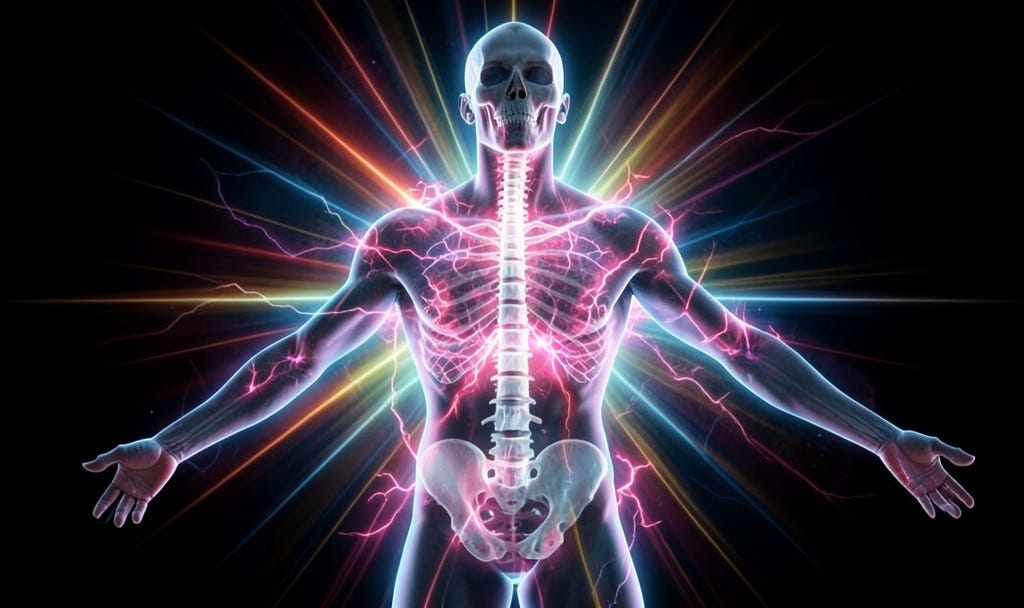
In traditional chiropractic philosophy, we use the term innate intelligence to describe the body’s inherent capacity to organize, adapt, and heal. It isn’t about being “smart” in the way we usually use that word. It’s a way of recognizing the coordination within a living body.
A philosophy of trust—not perfection
When I talk about innate intelligence, I’m not suggesting that the body is perfect or that it can overcome every illness or injury on its own.
For me, this philosophy begins with respect: respect for the body’s capacities, respect for its limits, and curiosity about what it needs.
Trusting your body doesn’t mean ignoring symptoms or avoiding necessary care. It means approaching your health with the understanding that your body is more than a collection of broken parts waiting to be fixed.
Where chiropractic fits
Your nervous system—your brain, spinal cord, and nerves—plays an important role in coordinating your body’s functions and responses.
Traditional chiropractic philosophy connects innate intelligence with the nervous system and describes vertebral subluxations as potential sources of interference. That is a philosophical framework; it should not be confused with proof that spinal misalignments cause disease or that an adjustment restores every aspect of health.
In my approach, chiropractic care begins with listening, observing, and paying attention to how you move and feel. The goal isn’t to promise perfect health. It’s to support you as a whole person rather than reduce you to a symptom.
The idea of innate intelligence invites a different starting point: not “What is wrong with this body?” but “What can we understand about this person, and how can we best support them?”