


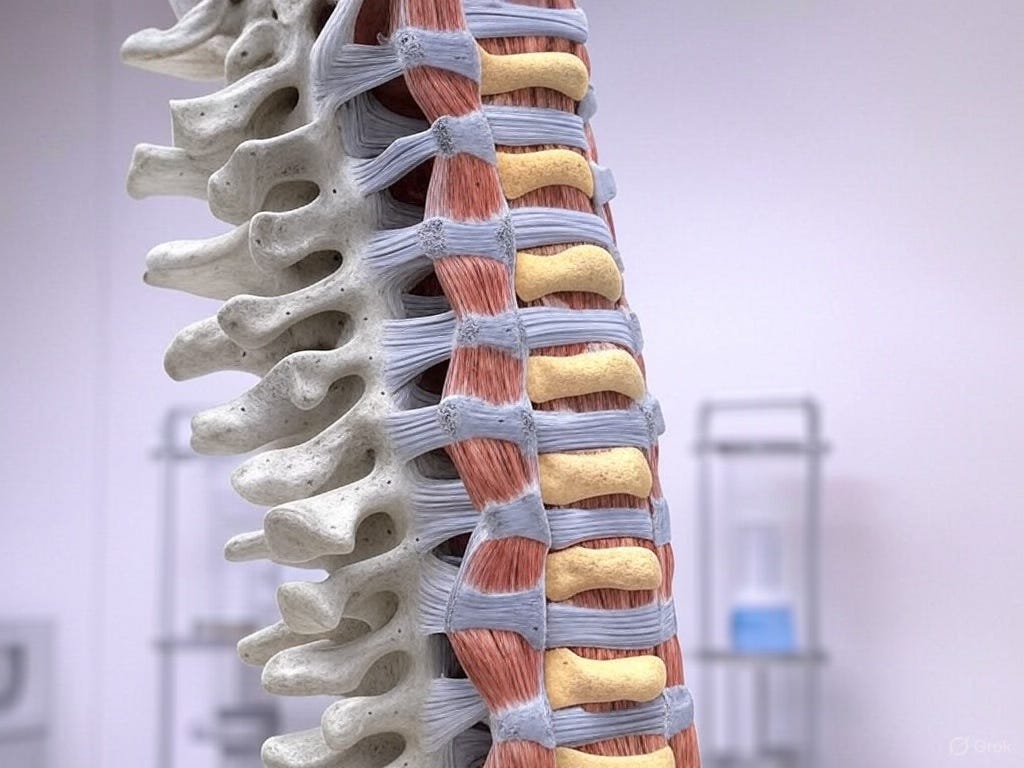
Spinal tensegrity refers to the application of the tensegrity principle to the structure and function of the human spine. Tensegrity, short for "tensional integrity," is a concept from architecture and biology where a structure maintains its stability through a balance of tension and compression forces, rather than relying solely on rigid, stacked components.
In the context of the spine, tensegrity describes how the vertebrae (the compression elements) are held together and stabilized by a network of soft tissues—muscles, ligaments, and fascia (the tension elements). This system allows the spine to be both strong and flexible, distributing forces efficiently across the entire structure rather than concentrating them in one area.
Here’s a breakdown of how it works:
Compression Elements (Vertebrae): The bony vertebrae act as discontinuous struts that "float" within the tension network. They don’t directly bear all the weight in a stacked, rigid way like a stone pillar would.
Tension Elements (Soft Tissues): Muscles, ligaments, and fascia form a continuous web that pulls and balances the vertebrae into alignment. This tension network absorbs and redistributes forces—like when you bend, twist, or lift something—preventing damage to any single part.
Dynamic Stability: Unlike a rigid structure, the spine’s tensegrity allows it to adapt to movement and stress. For example, when you move, the tension in the muscles and ligaments adjusts dynamically to maintain spinal integrity, while the vertebrae shift slightly but stay supported.
This model contrasts with older chiropractic views of the spine as a simple column of stacked bones. Instead, it’s a self-regulating, resilient system. Think of it like a suspension bridge: the cables (tension) and towers (compression) work together to hold everything up, even under varying loads.
In practice, spinal tensegrity explains why posture, movement, and balanced muscle tone are so critical. If the tension elements (like muscles) are too tight or too weak, the whole system can become unstable, leading to pain or injury. It’s also why practices like yoga or physical therapy often focus on restoring this balance.