


A study came out this month that should have been front-page news and wasn’t.
Researchers took 130 people with chronic low back pain and split them up. Some got a real painkiller. Some got a placebo — and here’s the part that matters — they knew it was a placebo. Nobody lied to them. The pill was empty and they knew the pill was empty. Half of them watched a short encouraging video before they started, somebody like them getting better.
Three weeks later, the empty pill plus the video had kept pace with the actual drug. Not almost. Not “showed promise.” Kept pace. And the thing that predicted who got relief — at three weeks and again at three months — wasn’t the pill. It was what the person expected.
So here’s my question, and I’ve been asking it for 25 years:
If the placebo does better than the drug, why TF are we not looking into mind-body methods?
Because that’s what this study actually tested, whether the researchers want to say it that way or not. Nobody’s back got fixed by an empty capsule. What changed was the forecast. Your nervous system is running a prediction about your body every second of the day, built out of every time you braced getting out of bed, every time you reached for a shelf and flinched before your hand even got there. Pain isn’t always a damage report. A lot of the time it’s an old prediction that never got updated.
I know something about updating predictions.
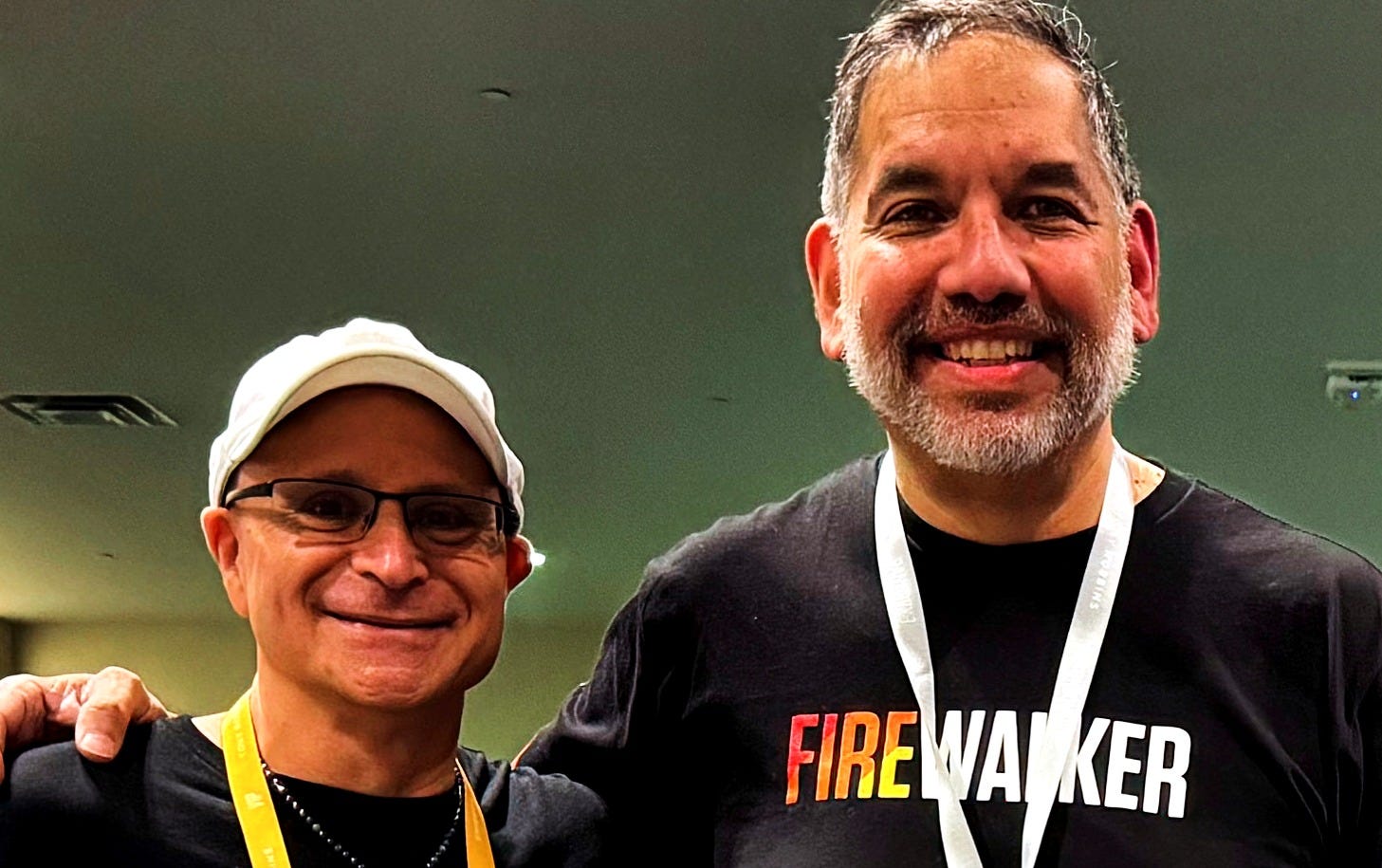
A few years ago I was at Tony Robbins’ Unleash the Power Within seminar in Dallas, standing barefoot at the edge of a bed of hot coals. We were chanting “Yes! Yes! Yes!” over and over, and the man running the line didn’t just wave me through. He waited. He kept looking in my eyes, reading whether I was actually ready, and only then did he let me go.
I walked across burning coals and I did not feel heat at all. Not “it wasn’t as bad as I thought.” Nothing.
And here’s the part nobody puts in the brochure. When you get to the other side, they tell you: don’t celebrate yet. Not until they hose your feet down, in case there’s a hot ember stuck to you. Because celebrating will drop you out of your mental state — and in the wrong state, that ember can still get you.
And after I was done, I felt like I could really accomplish anything I set my mind to. That’s not a poster slogan. That’s what a changed prediction feels like from the inside. I had evidence now — not borrowed, mine — that the loudest alarm my body owned could be wrong about me.
Sit with that for a second. The people whose entire business is walking on fire will tell you straight out: the state is the protection. The forecast is the thing. Change the prediction and the body does what it could not do before. Fall out of the prediction, and you’re exposed again.
The trial in that journal used a two-minute video to change a prediction. Tony Robbins uses an entire evening of it. I use a table.
I feel the forecast under my hands every day. Before a patient tells me where it hurts, the tone tells me what their system expects. The guarding is the prediction, written in tissue. And the work — the real work — isn’t forcing anything to change. It’s giving the nervous system new evidence, directly, until the old prediction doesn’t hold anymore.
The video gave those people in the trial borrowed evidence. Somebody else got better, so maybe I can too. That’s fine as far as it goes. But you don’t have to borrow it. You can collect your own — one experience at a time, every time your body does the thing it swore it couldn’t do. I collected mine barefoot in Dallas.
Here’s what I think the study won’t say out loud: the information was the treatment. The pill was just the envelope it arrived in. And if information — expectation, belief, a picture of your own body you can actually live with — can match a drug, then mind-body methods aren’t the alternative. They’re the main road nobody bothered to pave, because you can’t patent an expectation.
Your body isn’t broken and it isn’t making it up. It’s loyal to old information.
Give it better information.
Live Long and Prosper,
-Dan
I See You Well

If you can’t see it, don’t expect to live it. That’s become one of the quiet rules I practice by.