


As a chiropractor with over 25 years of experience, I’ve spent my career exploring the intricate dance between the body, mind, and spirit. My journey led me to develop the DeFT Technique—short for DeReuter Fascial Technique—a holistic system designed to empower healers, bodyworkers, and everyday individuals to tap into their intuition while restoring balance to the musculoskeletal system.
DeFT isn’t just another adjustment method; it’s a comprehensive approach that bridges time-tested chiropractic principles with cutting-edge insights into the body’s structural dynamics. At its core, DeFT recognizes the spine and surrounding tissues as a living, adaptive network, capable of profound self-healing when guided with precision and empathy.
In this article, I’ll unpack what DeFT truly is and illuminate how it weaves together the tensegrity model and its architectural principles, foundational chiropractic techniques, and innovative practices like Koren Specific Technique (KST) and Network Spinal Analysis (NSA). This integration creates a synergistic framework that addresses not only physical misalignments but also emotional and energetic blockages, fostering resilience and intuitive awareness.
The Foundations: Understanding the Tensegrity Model and Architecture
To grasp DeFT, we must first delve into tensegrity—the concept of “tensional integrity”—a biomechanical principle that revolutionized my understanding of the human body. Coined by architect Buckminster Fuller, tensegrity describes structures where rigid compressive elements (like bones) are suspended and stabilized by a continuous web of tensile elements (such as muscles, ligaments, and fascia).
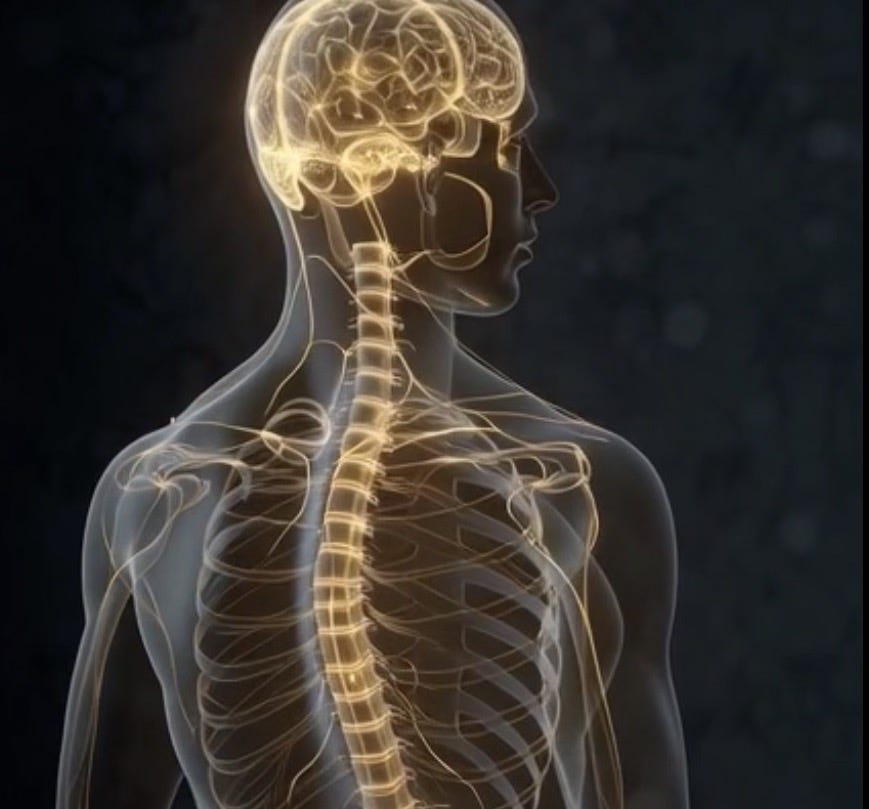
In the spine, this manifests as vertebrae acting as isolated compression struts, held in dynamic equilibrium by the fascial network, much like the cables and towers of a suspension bridge.
This model challenges the classical view of the spine as a rigid stack of bones prone to subluxations.
Instead, spinal tensegrity emphasizes a holistic, distributed system where forces are absorbed and redistributed across the entire structure, promoting flexibility, shock absorption, and efficient energy transfer.
Fascia, the connective tissue enveloping every muscle and organ, serves as the “smart” tensile fabric, sensing and responding to mechanical and emotional stresses in real time.
In DeFT, tensegrity architecture forms the blueprint. I teach practitioners to visualize the body as a geodesic dome or “buckyball”—a self-organizing form where local changes ripple through the whole.
This perspective shifts interventions from forceful corrections to subtle cues that realign the tensegral web, preventing compensatory patterns that lead to chronic pain or dysfunction. By honoring this architecture, DeFT enhances the body’s innate resilience, turning potential vulnerabilities into sources of strength.
Anchoring in Classic Chiropractic Techniques
DeFT is deeply rooted in the classics of chiropractic care, drawing from D.D. Palmer’s foundational hypothesis of “tone”—the normal tension in nerves and tissues that sustains health. Traditional methods like high-velocity, low-amplitude (HVLA) adjustments and diversified techniques remain cornerstones, providing the mechanical precision to restore joint mobility and neural integrity.
In practice, DeFT employs these classics strategically: a targeted thrust to a restricted facet joint might initiate the correction, but it’s always contextualized within the broader tensegral field.
The beauty of integrating classics lies in their reliability. They provide immediate feedback through cavitation (the audible “pop”) and improved range of motion, grounding the more ethereal avant-garde elements in tangible results. DeFT honors this heritage by using classic techniques as the “scaffolding” upon which intuitive, whole-body awareness is built.
Embracing the Avant-Garde: KST and Network Spinal Analysis
What differentiates DeFT beyond tradition is its fusion with avant-garde innovations, particularly Koren Specific Technique (KST) and Network Spinal Analysis (NSA). These methods introduce precision, gentleness, and neurological depth, aligning seamlessly with tensegrity’s emphasis on subtlety over force.
KST, developed by Dr. Tedd Koren, uses biofeedback tests to palpate and correct subluxations across the entire body, including cranial and organ systems. In DeFT, KST’s non-invasive probing integrates with tensegrity by mapping distortions in the fascial web without invasive thrusting. Imagine detecting a “stuck” tension node in the dural tube (the spinal cord’s fascial sheath); a light contact releases it, allowing the tensegral network to self-correct. This avant-garde precision complements classic adjustments by addressing hidden layers—emotional imprints stored in fascia—that HVLA might overlook.
Network Spinal Analysis, pioneered by Dr. Donald Epstein, takes this further with its light-touch “entrainment” process. NSA applies feather-like contacts to spinal “gateways” (cervical and thoracolumbar junctions), cueing the nervous system to generate undulating “waves” that dismantle chronic tension patterns. These waves embody tensegrity in motion: rhythmic contractions and releases that reorganize the spine’s architecture from a stressed, defended state to one of fluidity and adaptability.
DeFT incorporates NSA’s waves as a diagnostic and therapeutic bridge. After a classic adjustment, I might introduce an NSA-inspired contact to propagate the correction through the fascial tensegrity, amplifying emotional release (via my complementary DeEp—DeReuter Emotional Protocol). Patients often report spontaneous insights or sighs of relief, as stored trauma unravels. Paired with KST’s specificity, this creates a “conversation” with the body: classics initiate, KST pinpoints, and NSA facilitates integration.
The DeFT Integration
To broaden DeFt’s impact, I am developing a system that allows chiropractors to incorporate DeFT as a complementary technique within their existing practice.
Additionally, I am creating pathways for massage therapists and physical therapists to learn and utilize DeFT within their own professional scope, or to practice under the supervision of a licensed chiropractor—much like an apprenticeship model.
This approach ensures that more practitioners can unlock the benefits of DeFT, enriching their repertoire and offering patients a truly integrative healing experience.
I look forward to sharing my work.