


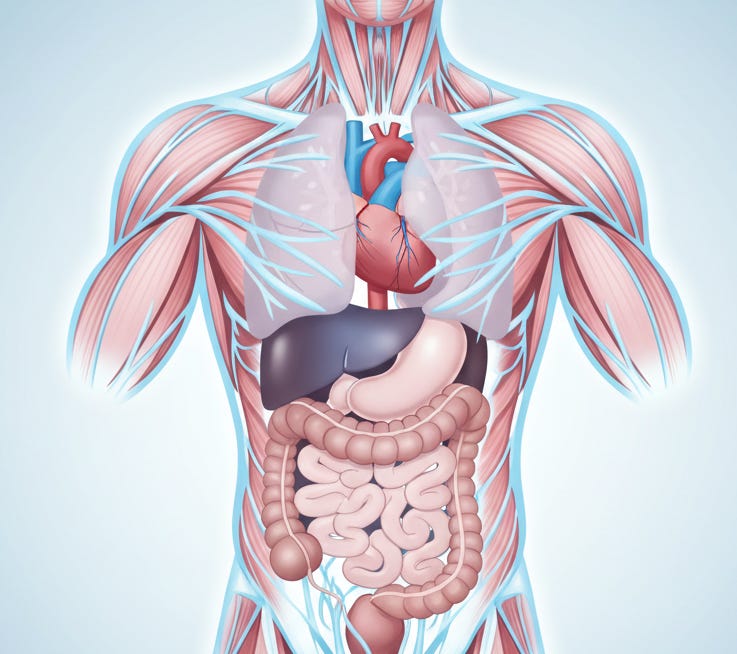
Most people think of fascia as that weird, sticky stuff surgeons cut through to get to the “important” parts. In reality, it’s the living matrix that holds you together—literally wrapping every muscle, organ, bone, and nerve in a continuous tensional network. It’s also the body’s quiet archivist.
Everything that ever happened to you is filed away in there.
That ankle sprain from college that still “acts up” when it rains.
The C-section scar that feels tight years later.
The shoulder you hunched for decades at a desk.
The breath you held during every argument you never quite resolved.
Fascia doesn’t forget. It stores the mechanical memory of injuries, the postural memory of habits, and—yes—the emotional memory of shocks and chronic stress. When something overwhelming happens, the nervous system says, “Brace,” and the fascia answers, “Got it.” It shortens, thickens, and organizes itself around the threat to protect you.
That stored tension isn’t damage. It’s intelligence doing its job with the information it had at the time.
The problem isn’t that the memory is there. The problem is when the protection outlives its usefulness and becomes the default setting.
That’s where DeFT comes in.
DeFT doesn’t try to erase the archive or bulldoze through the tight spots. It meets the tissue exactly where it is—gently, precisely, at the current threshold—and offers a quiet update: “You’re safe enough now to reconsider this old strategy.”
When the nervous system hears that message (and believes it), the fascia can let go of patterns it’s been holding for years, sometimes decades. Not because we forced it, but because it no longer needs to guard that old story.
I’ve watched people walk out of the office moving differently after one session—not because I “fixed” them, but because their body finally got permission to update an outdated file.
Your fascia isn’t the enemy. It’s been the most loyal bodyguard you’ve ever had. It just needs a gentle conversation, not a fight.
If you’ve been carrying tension that doesn’t seem to have a good reason anymore, maybe it’s not about stretching harder or digging deeper. Maybe it’s about listening to what’s being protected and letting the system know the danger has passed.
That’s what DeFT is designed to do: facilitate the conversation so your body can turn the page.
Live long and prosper,
-Danny

